UNDERGRADUATE
Bachelor’s
Bachelor admission in Denmark is based on an upper-secondary qualification that gives access to higher education in Denmark, together with programme-specific subject and language requirements.


Explore Denmark's research-focused public universities, English-taught programmes, transparent tuition planning and a structured residence-permit route.
*Study in Denmark pages currently report more than 500 English-taught programmes; application databases are being updated, so programme availability must be checked individually.
Denmark planning snapshot
Study routes
Denmark offers Bachelor’s, Master’s, PhD and other higher-education routes. For Indian applicants, the correct route depends on the qualification you already hold and the exact Danish programme.
UNDERGRADUATE
Bachelor admission in Denmark is based on an upper-secondary qualification that gives access to higher education in Denmark, together with programme-specific subject and language requirements.
POSTGRADUATE
Most Danish Master’s programmes require a relevant recognised Bachelor’s degree equivalent in level and length to a Danish Bachelor’s degree.
RESEARCH
Danish PhD admission is research-led. Most applicants have a relevant Master’s degree, while some faculties offer structured 3+5 or 4+4 research pathways.
Indian applicant strategy
There is no single nationwide percentage that guarantees admission to every Danish programme. The institution and programme determine the academic prerequisites and selection criteria.
English
Danish higher education requires a high standard of English. Study in Denmark describes English B as the normal minimum benchmark, while some programmes require English A.
Exact scores and accepted evidence are programme-specific.
Intake & deadlines
For Denmark, deadlines depend on the study level, university and intake. For many English-taught Master’s programmes, non-EU applicants applying for the August/September intake use a 15 January deadline, while a limited January/February intake can use 15 September. Bachelor’s applications through Optagelse.dk generally use 15 March for applicants with international/non-Danish upper-secondary qualifications.
For many English-taught Master’s programmes, non-EU applicants use 15 January. Check the exact university and programme.
A limited number of Master’s programmes offer a winter intake; non-EU deadlines can be 15 September.
International/non-Danish upper-secondary applicants generally use the 15 March Optagelse.dk deadline.
Deadlines can be programme-specific, so always verify the selected university's current application page before submission.
Do not use 15 March as a universal Denmark deadline. For many Master’s programmes, non-EU applicants use 15 January for an August/September start and 15 September for a limited January/February start. Bachelor’s applicants with international/non-Danish upper-secondary qualifications generally use 15 March through Optagelse.dk.
Public universities
For this Denmark hub, we are intentionally focusing on public universities first. The six leading options below cover research, engineering, technology, business and broad academic disciplines.

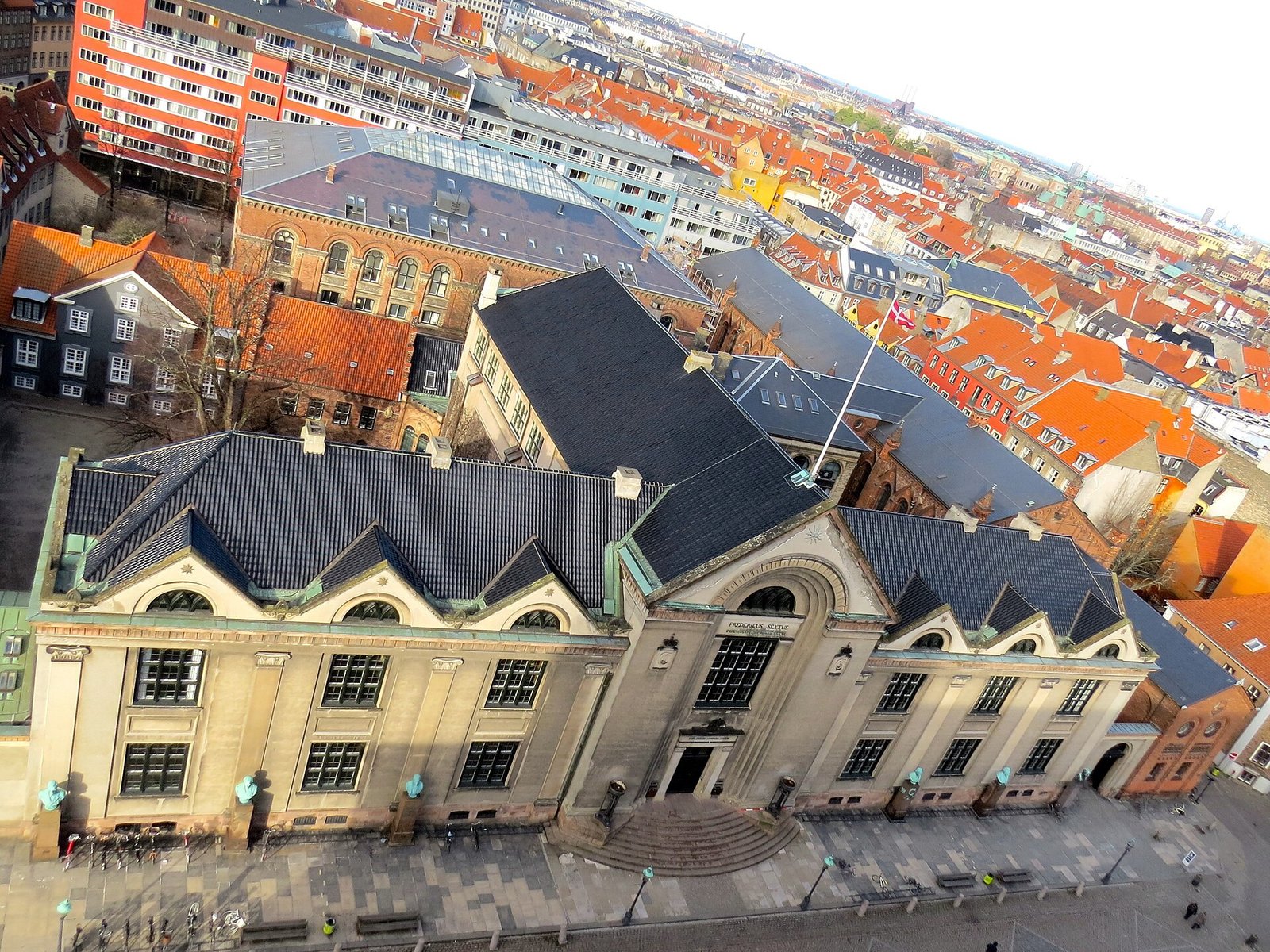
Denmark's oldest university and one of its strongest research institutions, with broad study options across disciplines.
Official university website ↗
A major research university offering English-taught study options and a strong international academic environment.
Official university website ↗
Denmark's leading technical university, particularly strong for engineering, technology, science and innovation.
Official university website ↗
Known internationally for problem- and project-based learning across engineering, technology, social sciences and more.
Official university website ↗
A comprehensive Danish university with campuses across the country and a growing international study portfolio.
Official university website ↗
A leading public university focused on business, economics, management, social sciences and international study.
Official university website ↗
A public research university known for interdisciplinary education and project-oriented learning.
Official university website ↗2026 research snapshot
Study in Denmark's 2026 CWUR summary lists University of Copenhagen, Aarhus University, DTU, University of Southern Denmark, Aalborg University, CBS and Roskilde University among the Danish institutions in the Global 2000.
Tuition
Denmark generally charges tuition to students from outside the EU/EEA/Switzerland unless an exemption applies. Study in Denmark currently gives a broad annual full-degree tuition range of €6,000–€16,000.
Some programmes can sit around the lower end of the national published range.
Specialised or higher-cost programmes can approach the upper end or differ from it.
Always use the selected programme's official tuition page for the real figure.
Study in Denmark lists exemptions including permanent residence, certain residence statuses and qualifying exchange arrangements. Refugee-related cases have their own rules.
Danish institutions can offer scholarships or tuition waivers, but these are programme-specific and often highly competitive. Never assume a public university is automatically free.
Application process
A Denmark application should move in a controlled sequence from academic eligibility to admission, tuition and residence permit.
Review academics, subjects, English level, budget, preferred field and realistic Danish study routes.
Compare public universities, programme content, entry requirements, tuition, location and career direction.
Match your Indian qualification against the programme's stated Danish entry requirements and prerequisites.
Prepare transcripts, certificates, English evidence, CV, motivation materials and programme-specific documents.
Manage admission decisions, conditions, tuition payment or scholarship arrangements and enrolment.
Prepare the SIRI student residence application, financial evidence and supporting documents.
Residence permit
Non-EU/EEA students admitted to a qualifying higher-education programme generally apply for a Danish residence and work permit through SIRI.
You need to be accepted into an approved Danish higher-education programme.
Non-EU/EEA students generally need a Danish residence permit for higher education.
The 2026 self-support reference is DKK 7,426 per month, with a maximum of DKK 89,112 for 12 months where proof is required.
Non-EU/EEA/Swiss full-degree students normally pay tuition unless an exemption applies.
State-approved higher-education students generally have a limited work permit of 90 hours per month September–May and full-time in June–August.
Graduates of approved full educational programmes can generally receive a job-seeking permit; the duration depends on the applicable rules and programme.
2026 financial reference
For higher-education students, SIRI currently uses DKK 7,426 per month as the self-support reference. For stays over one year, the maximum documentation amount is DKK 89,112 for 12 months.
SIRI's current guidance says a bank statement should show the date, applicant's full name, balance and currency. The statement should generally be no more than 30 days old at submission.
For a complete higher-education programme, if tuition has been paid in Denmark, SIRI's rules can mean separate self-support documentation is not required. Always check the exact application circumstances.
Student work
For students in state-approved higher-education programmes, the current Danish work permit allows up to 90 hours per month from September through May and full-time work in June, July and August.
After graduation
Under current SIRI rules, graduates who complete an approved professional Bachelor’s, Bachelor’s, Master’s or PhD programme can in applicable cases receive a residence permit for job seeking for up to three years.
Eligible graduates can be covered by the job-seeking framework.
A completed approved Bachelor’s can qualify under current rules.
A completed approved Master’s can qualify under current rules.
PhD graduates have a route into Danish employment after completion.
English-taught Denmark
Danish universities offer many English-taught programmes. You still need to satisfy the English-language requirement of the specific programme.
Indicative IELTS benchmark around 6.5 in Study in Denmark's general guidance.
Some programmes require a higher level, with an indicative IELTS benchmark around 7.0.
Danish-language programmes require Danish proficiency through the relevant accepted Danish test.
Language requirements are programme-specific. Do not treat the indicative national guidance as a universal IELTS cutoff.
Application control
The strongest Denmark applications are consistent from academic qualification to course choice, finances and residence-permit evidence.
Name, date of birth and passport validity must be consistent across the file.
Complete marksheets, transcripts, certificates and qualification details.
Verify every course-specific subject requirement before applying.
Use the exact accepted test or evidence and score required by the programme.
Where requested, keep the motivation statement specific to the programme.
Confirm the official fee, payment schedule and any scholarship or waiver.
Prepare the correct SIRI financial evidence if required.
Check date, applicant name, balance and currency against current SIRI rules.
Record the programme deadline, application portal and any test deadline.
Common mistakes
Public university does not mean every programme is easy to enter. Denmark's programmes can have specific academic, language and selection requirements.
Assuming all public universities are tuition-free
Applying without checking programme prerequisites
Missing the 15 March Bachelor's deadline
Treating one IELTS score as universal
Ignoring subject-level requirements
Using the wrong application portal
Relying on outdated financial figures
Assuming job-seeking rules are identical for every programme
Denmark packages
Denmark-focused support with the same transparent package philosophy used across the country pages.
incl. applicable taxes
University fees, tuition, deposits, application charges, tests, courier and other third-party/student-side costs are separate.
incl. applicable taxes
Government fees, tuition, insurance, travel, biometrics or other third-party costs are separate where applicable.
Not sure whether Denmark is right for your profile? Start with a one-to-one consultation before choosing an admission or visa support package.
FAQs
Planning-level answers based on current Danish official guidance. Exact university and SIRI requirements must be checked for the applicant.
Generally no. Students from outside the EU/EEA and Switzerland normally pay tuition for full-degree study. Current annual tuition is broadly around €6,000–€16,000, but the exact fee is set by the institution and programme.
Yes. Denmark's public universities include the University of Copenhagen, Aarhus University, DTU, Aalborg University, University of Southern Denmark, CBS and Roskilde University. The right choice still depends on programme fit rather than the university name alone.
Yes. Danish higher-education institutions offer a large range of English-taught programmes. Study in Denmark currently lists more than 500 English-taught study programmes.
English-taught programmes require proof of the required level of English, but the exact accepted test and score are set by the institution/programme. IELTS, TOEFL and Cambridge qualifications are commonly used.
Potentially, yes. Your Indian upper-secondary qualification must satisfy the Danish programme's entry requirements. Some programmes have subject-level requirements, quotas or other selection rules, so eligibility must be checked programme by programme.
For applicants with international or non-Danish upper-secondary qualifications, the general Optagelse.dk deadline is 15 March at 12:00 noon CET. Programme-specific rules and admission tests can also apply.
Master's deadlines are set by individual universities and programmes. They can differ substantially, so the selected university's current deadline should always be checked.
Study in Denmark gives a broad annual full-degree tuition range of €6,000–€16,000 for students who have to pay. Exact fees vary by institution and programme.
For higher education, the 2026 self-support reference is DKK 7,426 per month, up to DKK 89,112 for 12 months. If you have paid tuition in Denmark, the financial-documentation rules can differ.
For state-approved higher-education programmes, the current limited work permit allows up to 90 hours per month during September through May and full-time work in June, July and August.
Graduates of approved full educational programmes can generally receive a residence permit for job seeking. Under current rules, professional Bachelor’s, Bachelor’s, Master’s and PhD graduates can in applicable cases receive up to three years.
Many Danish PhD positions are advertised with scholarships or employment arrangements, but funding varies by position and institution. A PhD can also have tuition arrangements that differ from ordinary degree study.
Rules depend on the specific education and residence permit category. Non-state-approved higher-education programmes have additional restrictions for applications from 2 May 2025 onward, so the exact SIRI rules must be checked.
For international students, Denmark has a particularly broad English-taught postgraduate portfolio. Bachelor's options exist but are more limited and programme-specific, so the best route depends on your academic profile and available English-taught courses.
Denmark • 2026/27
Start with your academic profile, then choose the right public university, programme and residence-permit strategy.